High-Performance Go Movie Recommender Engine
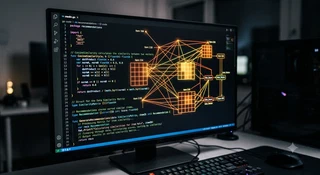
Calculating similarity matrices across vast user-item interaction datasets is a notoriously resource-heavy task. This project tackles that bottleneck by engineering a highly concurrent, big-data recommendation engine written purely in Go. Designed for maximum throughput and minimal memory overhead, the system dynamically calculates predictions using multiple mathematical models and exposes its functionality through both a lightweight Command-Line Interface (CLI) and a Web Application.
📊 Experimentation Dataset
To stress-test the concurrent architecture, the engine was built to process the official MovieLens Latest dataset from GroupLens. This massive dataset provided a true big-data environment, comprising millions of user ratings, tag applications, and movie metadata records to accurately evaluate the engine’s throughput, scaling capabilities, and memory efficiency under heavy load.
⚙️ The Engineering Challenge: Concurrency & Scale
Building a recommendation engine from scratch requires computing similarity scores between every single user or item in a dataset. In big data scenarios, this creates an $O(N^2)$ time complexity bottleneck that can completely lock up a single-threaded application.
The Solution: Instead of relying on heavy big-data frameworks (like Spark or Hadoop), this project solves the bottleneck at the systems level using Go’s native concurrency primitives. By dividing the similarity matrix calculations into smaller chunks, the engine distributes the workload across hundreds of lightweight goroutines. Safe data aggregation is handled via Go channels, ensuring that the multi-dimensional array calculations are processed in parallel without race conditions or memory leaks.
🧮 Algorithmic Models & Mathematics
A robust recommendation engine cannot rely on a single metric, as user behavior varies wildly. The system is engineered to dynamically select and execute different mathematical models depending on the type of data being analyzed:
| Similarity Metric | Mathematical Formula | Use Case in the Engine |
|---|---|---|
| Jaccard Index | $\frac{\vert A \cap B \vert}{\vert A \cup B \vert}$ | Ideal for binary/implicit data (e.g., whether two users simply watched the same movies, disregarding the actual 1-5 star rating). |
| Dice Coefficient | $\frac{2 \vert A \cap B \vert}{\vert A \vert + \vert B \vert}$ | Similar to Jaccard, but applies double weight to shared interactions. Used for finding highly overlapping user profiles. |
| Cosine Similarity | $\frac{A \cdot B}{\Vert A \Vert \Vert B \Vert}$ | Calculates the angular distance between multi-dimensional rating vectors. Excellent for matching users regardless of the volume of movies they have rated. |
| Pearson Correlation | Mean-centered covariance | The most advanced metric used. It identifies linear relationships while adjusting for user grading biases (e.g., matching a “tough grader” who rarely gives 5 stars with an “easy grader”). |
🔄 The Hybrid Filtering Pipeline
To ensure the engine does not suffer from common pitfalls like the “Cold Start” problem or recommendation bubbles, it utilizes a multi-tiered filtering pipeline. The system cross-examines the dataset from three distinct perspectives before delivering a final output:
- User-User Collaborative Filtering: Identifies peer grouping similarities. The system finds users with historical rating patterns similar to the active user and recommends items those “neighbors” enjoyed.
- Item-Item Collaborative Filtering: Maps relational boundaries between the media itself. If a user likes Movie A, the system finds Movie B, which shares a highly similar user-consumption pattern.
- Tag & Title-Based Content Filtering: Performs deep metadata analysis. This acts as a fallback and enhancer, finding contextual similarities based on genres, keywords, and titles.
- The Hybrid Aggregator: The final stage of the pipeline. The engine aggregates the outputs of the collaborative and content-based filters, applies a weighting algorithm, and delivers a final, normalized top-N recommendation list.
🖥️ System Interfaces
To ensure the backend logic was highly accessible, the engine was decoupled from its presentation layer, allowing it to serve data through two distinct interfaces:
- Command-Line Interface (CLI): Designed for rapid testing, batch processing, and server-side execution with minimal overhead.
- Web Application: A user-friendly frontend that allows end-users to interact with the engine, input preferences, and view recommendations dynamically.
🔗 Resources & Artifacts
- 💻 Source Code & Documentation: Explore the Go architecture, concurrency patterns, and algorithmic implementations on GitHub - john-fotis/Movie-Recommender.
